
I wanted to add some images from my Dexcom CGM to help illustrate the process I have been going through as I have been shifting my diet to one that is a high-percentage carbohydrate (not necessarily in the total quantity consumed). To recap, I have been eating about 30-50 grams of carb per meal, with an emphasis on drastically minimizing fats and animal products of any kind-as well as processed foods of any kind. Fruits, roots and leaves have been my focus-when I say “carbs” understand that I am referring to whole foods and not cupcakes and Fritos- and although my adherence has not been 100 percent, it has overall been pretty good with minimal cheating! You can read about my first impressions here.
Above is a graph of my blood sugar data (1 month) going in to this experiment, on the first or second day that I started shifting my diet. The preceding numbers had been quite good from a blood sugar control perspective, however that alone was not enough to be satisfactory, given the lack of energy I had on a ketogenic, low carb diet which you can read about here. The goal for me has been to maintain reasonably equivalent BG control with a greater carb intake and energy output in hopes that these will fuel my ability to climb some major walls in the next several years.
In the images below you will see some of the successes and failures I had while on this diet. Overall, I believe it to be worth continuing with for me because the energy and recovery I have experienced make it worth sacrificing some of the foods I like to eat. With diligence, I believe it is possible to get equivalent levels of control (for me, maybe not for others?) as with a strictly low carb diet and for whatever my experience is worth to the community at large, I feel like it is a safer bet to start lower carb and work up to greater quantities than the other way around. There are few stances that I hold a hard line on in regard to diet but I believe that a diet of whole foods will always beat a diet of processed foods, regardless the distribution of macronutrients.
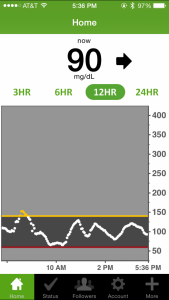
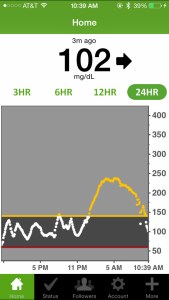
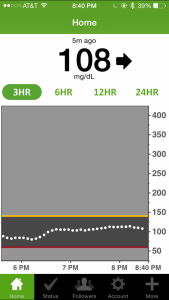
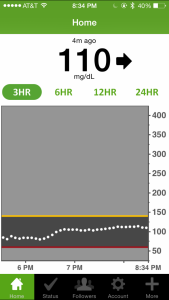
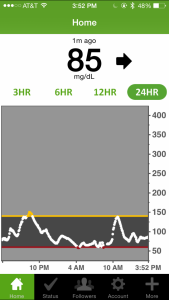
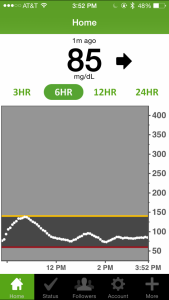
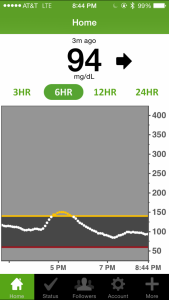
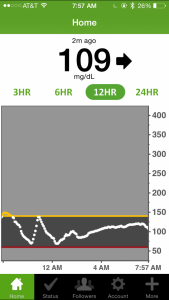
This is, of course just a snapshot of my experiences. I am totally happy to answer further questions-and I don’t claim to know that this will work for anyone. I don’t even claim to know that it will keep working for me! I suspect it might, which is why I have come this far and am continuing further. I do think that it requires a heads-up management approach because the highs come up sharper and the insulin sensitivity increases are remarkable. The one thing that I really like is that now I can “correct” a high/rising blood sugar by going out and exercising-usually just walking or running. That is something that was unheard of for me on a LCHF diet-insulin was the only method.
In closing, I want to share my month of June ( high carb ) graph. It’s not perfect but it shows that I have not sacrificed adequate blood sugar control by shifting to a high carb plant based diet. However I believe it also shows that adaptation is both possible and worthwhile in the long run given all of the benefits I have experienced. It’s good learning process in my view and I will keep pressing forward with the diet to see if these results are consistent and reproducible.
If you got anything out of this blog series about my nutritional experiments, I’d like to encourage you to check out the LivingVertical Podcast because I am going to discuss in greater depth the entire process AND bring on a special guest- Cyrus from MangoManNutrition who can really get granular around the science behind this approach-and is an athlete-and has type1. I hope to be able to really take this diet and explore it in some useful depth. If you have questions for me-or about the science behind this diet (for me to ask Cyrus on the podcast) LEAVE A COMMENT BELOW!
Please support the work LivingVertical is doing by making a small monthly donation to the blog via paypal (right hand column on desktop or scroll down on mobile. 1 dollar a month from each of our readers would cover the costs of maintaining this website. You can also buy one of our diabetes empowerment photo prints!

Hey Steve, I’ve got a about 3 months under my belt with since my diagnosis of Type 1 diabetes. I’ve really enjoyed your blog and your discussion of how you manage your nutrition/diabetes with an active lifestyle. When you’re taking about training how much of what you’re doing is cardio based. Using my Dexcom I have seen dramatic shifts in insulin sensitivity during and after some of my longer runs and managing this drastic changes usually requires a heavy does of simple carbs. Do you have anything better that works for you in these extended workouts?
Hi Nathan! Great to hear from you! So funny you ask because I just am stretching after a run and I was texting my t1 friend Jeffrey joking about how I’m a runner now. The new diet has given me more energy so I actually have incorporated running into my routine! Anyhow, Jeffrey and I were JUST texting about this very issue. I’d love to have anyone else who is reading feel free to chime in because obviously my method may not work for you!
That said, I usually see my BGs drop somewhere around 45 min into hiking or 1.5 miles into running-this is without any (or almost no) rapid insulin on board, just coasting on basal. If I have IOB then it’s out the window. I have to test that still…maybe an upcoming blog series?
So you’re not alone with the dropping BGs! I have found that fats actually act as a buffer against glucose absorption. So adding some fat (for me it comes as cashews or a bit of almond butter, or a protein bar) along with some carbs. Adding fat/protein to the mix slows down the drop. Try a few different ratios to see just how much you need. I have been tuning it in and over 1-2 miles about 12-15 grams of fat with about as many carbs seems to hold me steady without making me feel like I ate a brick. I sort of do 50/50 when I’m going hard, and keep the additional fats coming in after when I am anticipating insulin sensitivity to be high. Sometimes if I’m on the bubble, like I ran but I’m not sure if I ran enough to be really sensitive-I’ll take a unit and just watch on my dexcom and just see what happens. 1 unit or whatever you consider a trivial dose. If it does what I’d expect normally I just tack on the remaining bolus and go for it. If it’s going crazy dropping then I eat accordingly-but watch for the sensitivity to wear off after a few hours and you’ll see the upward creep and maybe have to correct.
Thanks for the reply! I haven’t played around too much with the fats before/while running so I’ll have to give that a try.